
As AI Gets Smarter, Great Branding Matters Even More
Why professional branding matters more than ever in the age of AI.
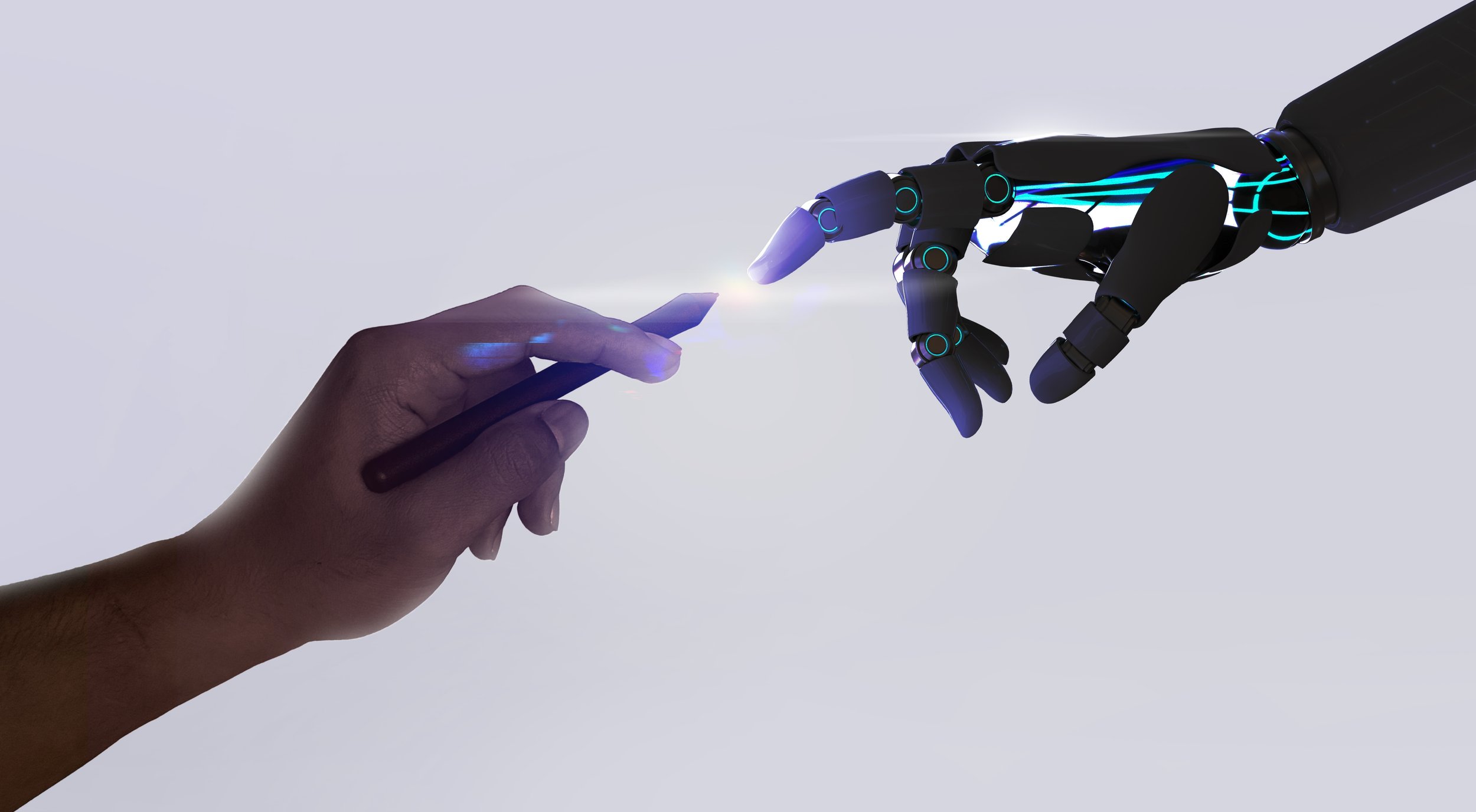
Artificial intelligence isn't going anywhere. Whether we like it or not, it's changing the way businesses create content, market themselves, and build their brands. Every day, more companies are turning to AI to create logos, websites, social graphics, marketing materials, and even entire brand identities.
At JK Creative, we use AI too. It helps us brainstorm ideas, speed up repetitive tasks, organize information, and explore creative directions faster. Like any great tool, it has earned a place in our workflow. But somewhere along the way, businesses started asking the wrong question. Instead of asking, "How can AI help my business?" they started asking, "Can AI replace my designer?" Our answer is simple: Not if you're serious about growing your business.
Because let's be honest... Your brand deserves more than "good enough." More than a prompt. More than something that simply looks nice on a screen. Your brand is often the very first handshake someone has with your business. It shapes first impressions long before a customer speaks with your team, walks through your doors, or clicks "Contact Us."
That's not something we'd leave to chance. Yet we're seeing more and more businesses rely entirely on AI to create logos, websites, social graphics, marketing materials, and complete brand identities. At first glance, the results can look convincing. But look a little closer, and something feels...off.
Maybe the website has nice imagery but doesn't actually guide visitors toward taking action. Maybe the social graphics follow every trend but don't match the business behind them. Maybe the logo is visually interesting (until you try printing it on a business card, embroidering it on a polo, or putting it on a trade show banner.) Individually, those details may seem small. Together, they shape how people perceive your business. And your audience notices. In 2026, consumers are becoming remarkably good at spotting the difference between something that was thoughtfully crafted vs something that was simply generated.
Here's what we believe: AI can absolutely help create content. But building a brand people trust? That's still a very human job. Professional branding has never been about making something look pretty. It's about solving problems, telling stories, building trust, and creating experiences that help people connect with your business.
The design is important. But the thinking behind it is what creates lasting value. In fact, as AI becomes more accessible, we believe investing in professional branding isn't becoming less important. It's becoming one of the smartest investments a business can make.
Your Customers Notice More Than You Think
70% of consumers believe AI-generated advertising is "missing something."
(2026 "State of Marketing & AI" report by Canva and The Harris Poll)
Today's consumers are incredibly good at recognizing when something doesn't feel authentic. They may not always know exactly why, but they know when a brand feels generic, disconnected, or like it's trying just a little too hard. It's the same reason heavily filtered photos eventually fell out of favor. People don't expect perfection. They expect something real.
The research backs that up. A January 2026 study by the IAB and Sonata Insights found that 71% of Gen Z and Millennial consumers believe they've already seen AI-generated advertising, up from just 54% two years earlier. Even more telling, only 45% felt positively about those ads, while 82% of marketing executives believed their audiences would respond positively. That's a pretty significant disconnect between what brands think they're communicating and what customers are actually experiencing.
Another 2026 study by Canva and Harris Poll found that 70% of consumers believe AI-generated advertising is "missing something." Our guess? It isn't better graphics. It's better thinking.
As designers, we've trained our eyes to notice the obvious AI tells—strange anatomy, inconsistent lighting, odd typography choices, or visuals that simply don't make sense. But honestly? Those aren't what concern us most. What concerns us is when branding loses its intention. Sometimes everything technically looks good, but it doesn't actually make sense for the business, the audience, or the goal. That's the difference professional creative direction makes.
The best designers don't start in Illustrator. They start by listening. They learn about your customers. Your competition. Your goals. Your personality. The problems you're trying to solve. The opportunities you might not even realize exist yet. Then they design. The pretty part actually comes last. Because great branding isn't created by asking better prompts. It's created through experience, perspective, curiosity, and thousands of creative decisions that happen long before anyone chooses a font or color palette.
That's why professionally built brands simply feel different. Not because they're more expensive. Because they're more intentional. And whether your audience can explain it or not... They can absolutely feel it.
Your Brand Is Worth Getting Right
31% of consumers trust a brand less when they recognize AI-generated content.
Klaviyo's 2026 AI Consumer Trends Report
Every interaction someone has with your brand shapes an opinion. Before someone reads a single word on your website or speaks with your team, they've already started deciding whether you feel credible, trustworthy, and worth their time. That's why branding has never been about making something look good. It's about creating confidence.
Every decision—from your logo and website, to your marketing materials and social presence—either builds trust or slowly chips away at it. Research is beginning to show just how much that matters. Klaviyo's 2026 AI Consumer Trends Report found that 31% of consumers trust a brand less when they recognize AI-generated content.
For established brands, recovering from a weak campaign is usually possible. For small and mid-sized businesses? Every first impression carries more weight. You don't have decades of brand recognition to rely on. Your website, logo, and marketing materials are introducing your business long before you ever get the chance to introduce yourself.
We've seen businesses spend weeks (and sometimes even months) using AI to build websites, logos, and marketing materials, only to realize something still wasn't working.
The website looked empty despite having too much text.
The messaging felt generic.
The fonts competed with each other instead of working together.
The photography looked overly polished but emotionally flat.
The logo looked great on a screen...until it had to exist in the real world.
Individually, none of those things seemed like a dealbreaker. Together? They created a brand that felt forgettable. By the time those businesses came to us, we weren't starting with a strong foundation. We were trying to rebuild one. Sometimes that means making the best of what's already there. Rewriting messaging, improving visual hierarchy, simplifying user experience, refining typography, and adding thoughtful creative direction wherever we can.
But if we're honest...Those are strategic bandages. Could we improve it? Absolutely. Would it have been stronger if we'd built the foundation together from the beginning? Almost every time. One of our favorite client comments is: "Can you make this feel more like us?" Ironically, that's often where the real creative work begins. Because what they're really asking isn't for prettier graphics. They're asking for clarity. For personality. For confidence.
Could AI have helped create pieces of that project faster? Absolutely. But speed isn't the same as strategy. And more content doesn't automatically create a stronger business. One of the biggest misconceptions we see is that if AI can generate more graphics, more social posts, or more website pages, it must create better marketing. It doesn't. Professional branding isn't about creating more. It's about creating the right foundation. Because when the foundation is strong, everything you build on top of it becomes stronger too.
Experience Can't Be Prompted
One of the biggest misconceptions about AI is that if it can generate a logo, write website copy, or create social graphics, then it's doing the work of a professional designer. Spoiler alert: It isn't. The value of hiring a creative agency has never been access to better software. It's access to better judgment. After collective decades of building brands, we've learned something that AI simply can't replicate: Experience teaches you what questions to ask before anyone starts designing.
Sometimes clients come to us asking for a logo when what they really need is a stronger brand strategy. Other times they believe they need more social media content, when the real issue is a website that isn't converting visitors into customers. It's a little like asking for fresh paint when the foundation needs attention. Those aren't design problems. They're business problems. And solving business problems has always been the real job of a creative partner.
That's why our process starts long before anyone opens a design program. We listen. We ask questions. We challenge assumptions. Sometimes we tell clients the answer they weren't expecting—because it's the answer that's actually going to move their business forward. That's what you're investing in.
Not just a logo. Not just a website. Not just a brochure.
Perspective. Experience. Creative direction. Professional judgment.
The design is simply the final expression of all those decisions. (The pretty part actually comes last.)
AI will continue getting better. It will generate faster. It will become more convincing. None of that changes what businesses need most. As creation becomes easier... Judgment becomes more valuable.
Anyone can generate a design. Knowing whether it's the right design for your business is where professional expertise still matters. And experience? That's something that can't be prompted.
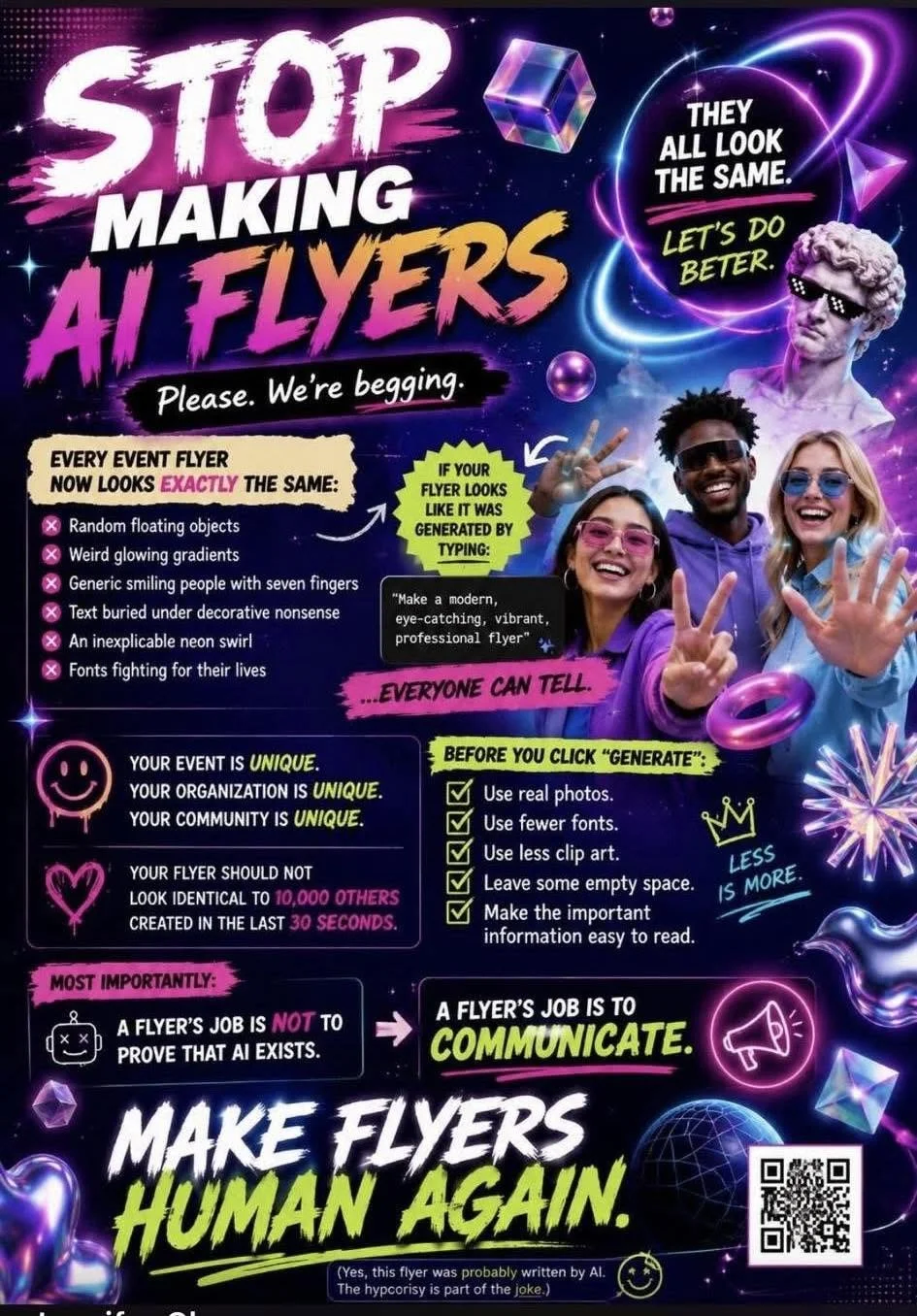
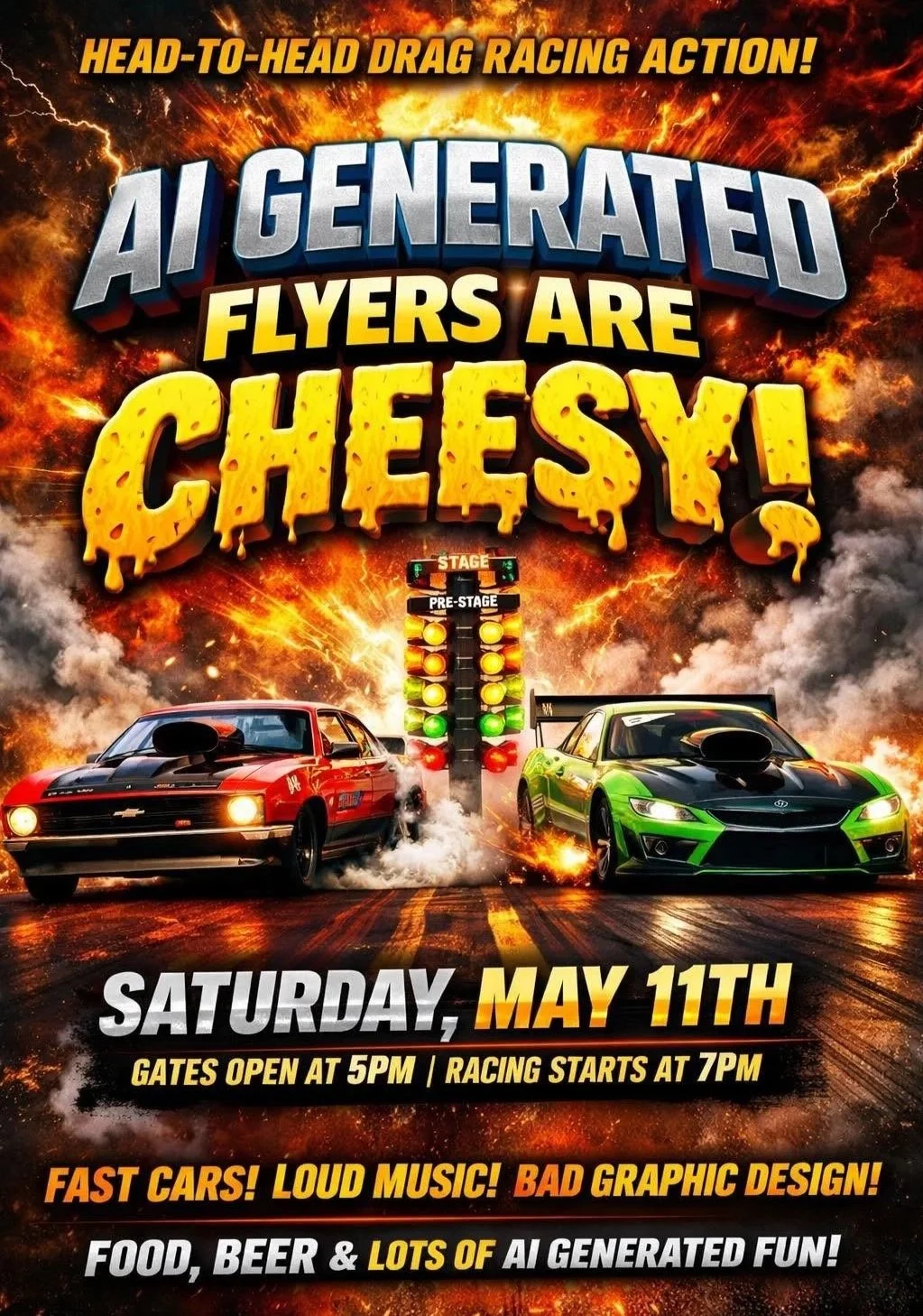
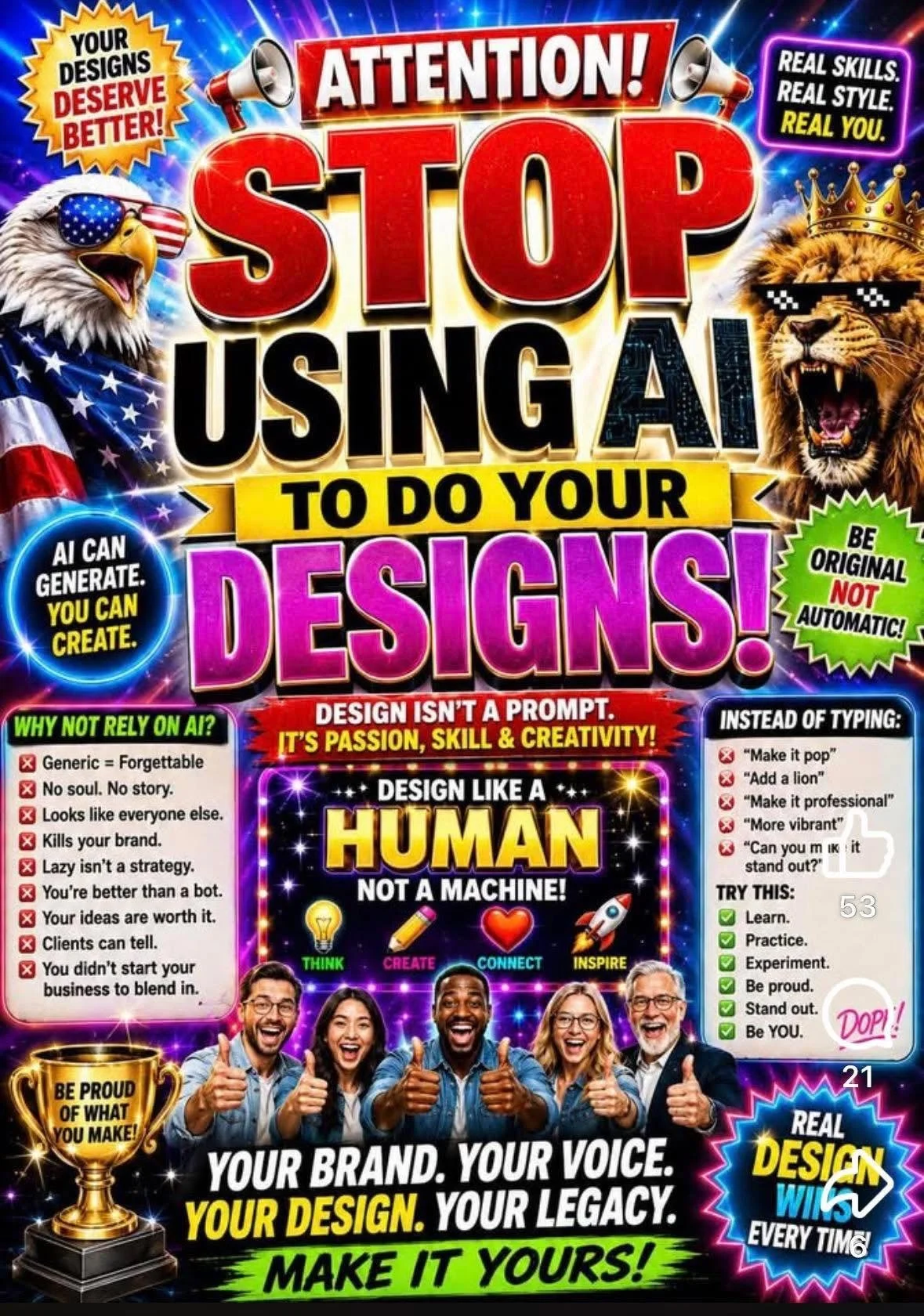
Build the Brand Your Business Deserves
The businesses that thrive over the next decade won't be the ones using the most AI. They'll be the ones building the strongest brands.
AI isn't going away. (And honestly...neither are we.) Like every major technological shift, AI will continue changing the way businesses work. It will make content faster to produce, workflows more efficient, and everyday tasks easier to accomplish. Those are all good things. But none of those advancements change one simple truth: Your brand is one of the most valuable investments you'll ever make in your business.
It's your first impression.
Your reputation.
Your credibility.
It's often the deciding factor between someone choosing you or choosing a competitor.
That's why it's worth getting right.
It's also why business owners should understand that fully AI-generated creative work may not qualify for the same copyright protections as original, human-created work. If your logo or brand identity is something you plan to build your business around for years to come, that's an important consideration. Just because you can generate something in 30 seconds doesn't mean it should represent your business for the next 10 years.
At JK Creative, we've never believed technology is the enemy. We've always believed the best work happens when experienced people collaborate and use the right tools. That's exactly how we approach AI. It helps us work smarter. It helps us move faster. It helps us spend more time where it matters most—thinking, collaborating, solving problems, and helping our clients make better decisions.
Because our clients aren't hiring us for access to AI. They're hiring us for everything AI can't replace.
Perspective.
Experience.
Judgment.
A collaborative partner who knows when to push back, when to ask another question, and when to say, "I don't think this is actually the problem we're solving."
That's where great branding begins.
Ironically, AI hasn't made professional branding less valuable. It's made it more valuable. Because when everyone has access to the same tools, the businesses that stand out won't be the ones creating the most content. They'll be the ones creating the most meaningful brands.
If you're going to invest anywhere, invest in the foundation first. A thoughtful brand, clear messaging, and a strategic website will continue paying dividends long after today's AI tools become tomorrow's old news. People don't connect with perfect.
They connect with businesses that feel genuine.
They connect with thoughtful experiences.
They connect with brands that know exactly who they are.
There's nothing more rewarding than watching one of those brands come to life. Seeing a logo installed on a storefront. Watching a website launch after months of collaboration. Driving past a billboard and thinking... "We helped build that." Those moments remind us that great branding isn't really about logos or colors or typography.
It's about helping great businesses grow. And that's exactly why we'll keep doing what we do.
Ready to Build Something That Feels Unmistakably Yours?
Whether you're launching a new brand, refreshing your website, or figuring out where AI fits into your marketing, we'd love to help. At JK Creative, we combine strategic thinking, creative expertise, human collaboration, and the right technology to build brands that don't just look great—they build trust, attract the right customers, and grow alongside your business.
(And yes... You'll get to work with some really awesome humans, too.)
Because we still believe the best brands are built by people who care enough to get them right. Let's build something that's intentionally designed, authentically yours, and made to last.


Everyone is talking about what AI can create. We're more interested in what it can't replace. Here's why professional branding still matters—and why your brand deserves more than a prompt.