
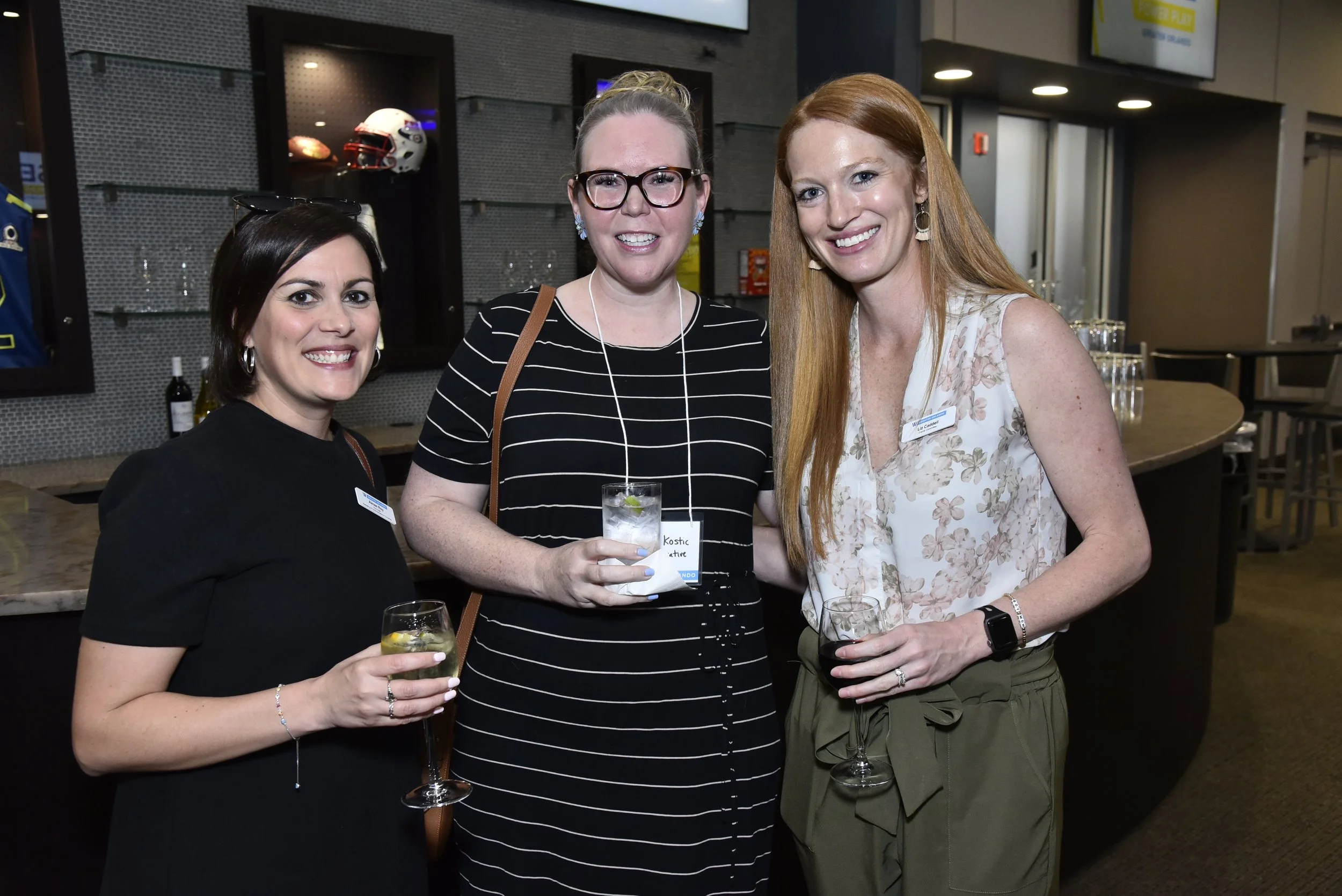
JKC Founder Julie at a networking event with WISE Greater Orlando.
Picture this: you're at a networking event. The room is buzzing, name tags are everywhere, and somewhere in the middle of the room, drink in hand, you realize that nearly everyone is pitching. And almost no one is actually connecting.
People are exchanging business cards like currency, rehearsing their elevator pitch on loop, and scanning the room for whoever looks most useful. It's exhausting. And more often than not, it doesn't work.
After years of showing up in Orlando's business community, at startup mixers, nonprofit galas, startup mixers, and industry conferences, I noticed the same pattern. The people who left the most lasting impressions weren't the loudest voices in the room. They weren't the ones with the fanciest title or the most polished pitch. They were the ones who made others feel genuinely seen, who showed up consistently, and who understood something most people miss: Networking isn't about collecting contacts. It's about building a reputation, one conversation at a time.
A Presence Built Across Orlando's Business Community
Through my consistent involvement with organizations like NAWBO, PRSA, and WISE, spanning corporate, nonprofit, and entrepreneurial spaces, I've spent years observing what separates the networkers who build real influence from those who simply collect LinkedIn connections. Whether you're a small business owner trying to grow your referral network, a corporate professional building internal and external relationships, an entrepreneur looking for collaborators, or a nonprofit leader cultivating community partnerships, the fundamentals are the same.
What I developed from all of those rooms, all of those conversations, and all of those follow-ups (and failed follow-ups) is a simple but powerful framework:
The B.R.A.N.D. Method
Five principles for building your personal brand in every room you enter.
Let’s dive in…

A networking mixer in Washington D.C. for Goldman Sachs 10,000 Small Businesses Alum.
B - Be Curious
Lead with interest, not self-promotion.
The fastest way to stand out in a room full of people trying to be interesting? Become genuinely interested. Most networking advice tells you to perfect your pitch, but the truth is, people remember how you made them feel, not what you said about yourself.
When you lead with curiosity, you signal something rare: that you're actually paying attention. You ask questions that go beyond the surface. You listen, really listen, instead of waiting for your turn to talk. And in doing so, you make the other person feel valued in a way that no elevator pitch ever will.
Tips for Being Curious:
Tip #1: Prepare 2–3 conversation starters before you arrive so you're never scrambling for something to say. Sometimes I find that a compliment can be a great start too.
Tip #2: Instead of "What do you do?" try "What's been keeping you busy lately?" It's warmer, more open-ended, and leads to far more interesting answers.
Tip #3: Set a small personal goal: learn one genuinely interesting thing about every person you meet. I love when I find something we have in common to deepen conversation.
R - Represent Your Value
Show up in a way that reflects your brand.
Before you say a single word, you've already communicated something. Your appearance, your confidence, the materials you carry: they all send a signal. The question is whether that signal is intentional.
Representing your value isn't about performing or overselling. It's about consistency. When the way you show up in a room aligns with what you actually offer and how you want to be known, you don't have to work as hard to make an impression. You simply are the impression.
This applies to your 30-second introduction as much as your business card. Both should feel natural, clear, and aligned with your brand personality. A well-designed card that reflects the same care you put into your work says something before you ever open your mouth. So does a confident, unhurried way of introducing yourself that doesn't sound rehearsed.
Tips for Representing Your Value:
Tip #4: Have a 30–60 second explanation of what you do that sounds natural — not memorized. Practice it until it feels conversational.
Tip #5: Dress in a way that aligns with your brand personality. You don't need to be the most formal person in the room, but you should be intentional. I try to wear a brand color or fun earrings that people find creative. (Like coffee cups for a coffee meetup!)
Tip #6: Invest in a professionally designed business card. While the QR codes are convenient the truth is many people will scan it and then never remember to loo you up again. A thoughtfully designed card leaves a stronger, more memorable impression. There is even science behind the sense of “touch” making cards more effective too!
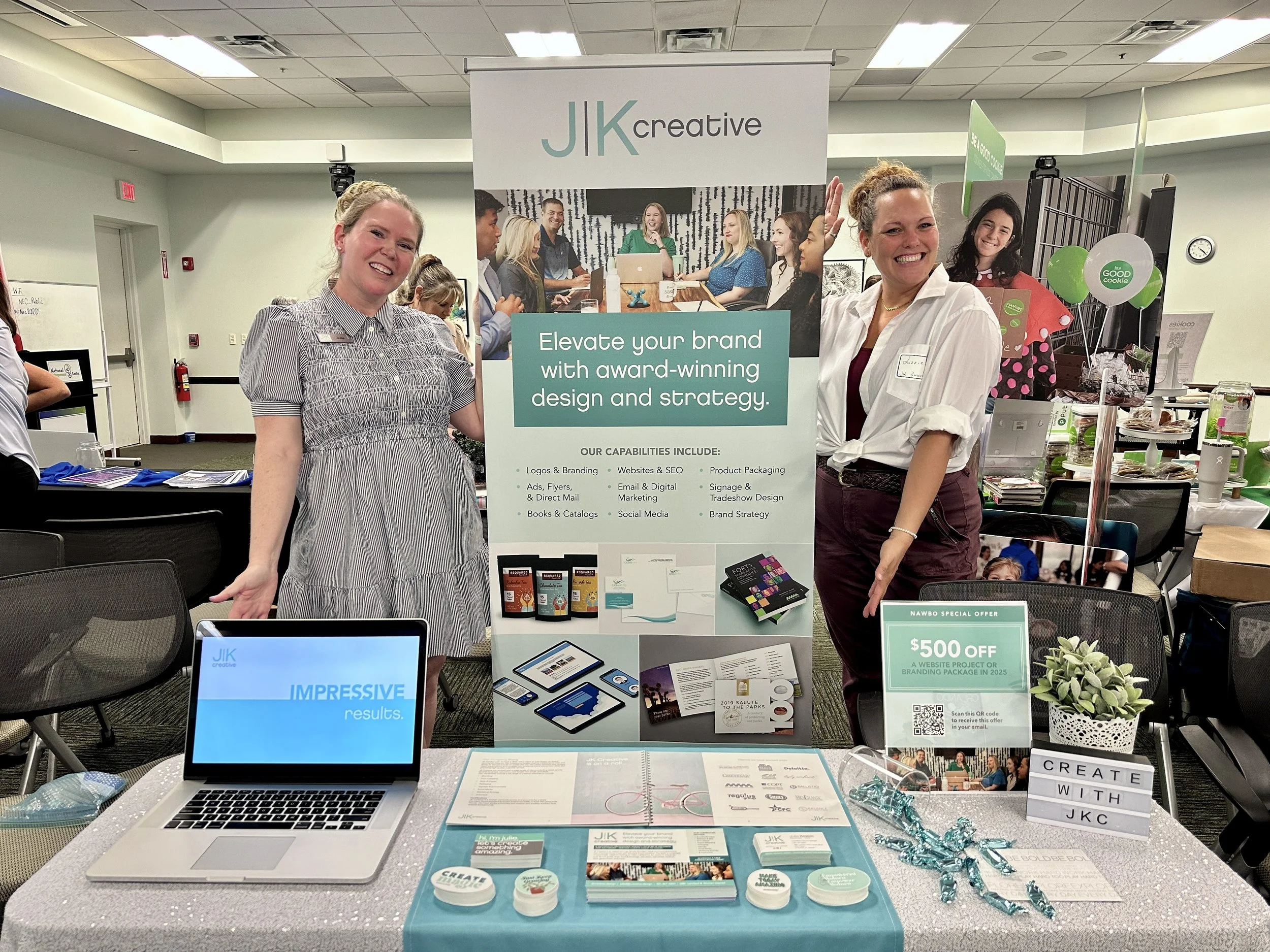
The JKC team at a local NAWBO networking event.
A - Ask Better Questions
Elevate the depth of your conversations.
There's a difference between being curious (opening a conversation with genuine interest) and asking better questions (deepening it with strategic intention). The first gets you through the door. The second is where real connection and real opportunity begin.
Better questions move past the surface. They invite people to talk about their challenges, their goals, and where they're headed. They position you as someone who thinks differently, someone worth remembering. And in a room full of small talk, that's a significant advantage.
This is especially true if you're a corporate professional identifying potential collaborators, an entrepreneur looking for referral partners, or a nonprofit leader trying to understand where community priorities are shifting. One deeper question can completely change the trajectory of a conversation.
Tips for Asking Better Questions:
Tip #7: "What's your biggest focus this quarter?" is one of the most valuable questions you can ask. It's specific, strategic, and tells you immediately whether there's alignment.
Tip #8: When the moment feels right, ask: "How can I support you?" It's disarming in the best possible way. I love being able to connect people or make a great recommendation for another industry group someone should check out.
Tip #9: Look for common ground — shared industries, challenges, or goals — to build genuine rapport before any business conversation begins.
N - Nurture the Connection
The follow-up is where real networking happens.
Here's the uncomfortable truth: most networking falls apart right here. The event ends, the business cards go into a drawer, and the connections that felt so promising at 7pm on a Tuesday are forgotten by Friday.
The follow-up isn't a courtesy. It's the entire point. Everything you did in that room was an investment. The follow-up is where you collect on it. And the difference between a generic "Great to meet you!" email and a personalized note that references something specific from your conversation is the difference between being remembered and being forgotten.
Long-term relationship building will always outperform short-term networking hustle. The people who build real influence aren't necessarily attending the most events. They're the ones who stay in touch, who add value without expectation, and who show up in people's inboxes and lives in ways that are genuinely useful.
Tips for Nurturing Connections:
Tip #10: Try to follow up within 24-48 hours. The window closes fast. I block some time on my calendar and treat it like a to do list item.
Tip #11: Reference something specific from your conversation. It shows you were paying attention, and it makes your message feel personal rather than templated.
Tip #12: Offer something of value — an introduction, a relevant article, a resource — without expectation. Generosity is memorable.
For staying organized: consider tracking your key connections in a simple spreadsheet or CRM. The tool doesn't matter: a spreadsheet, your phone notes, a paid platform. The habit does. Know who you met, when you last connected, and what you talked about. Your network is one of your most valuable professional assets. Treat it like one.

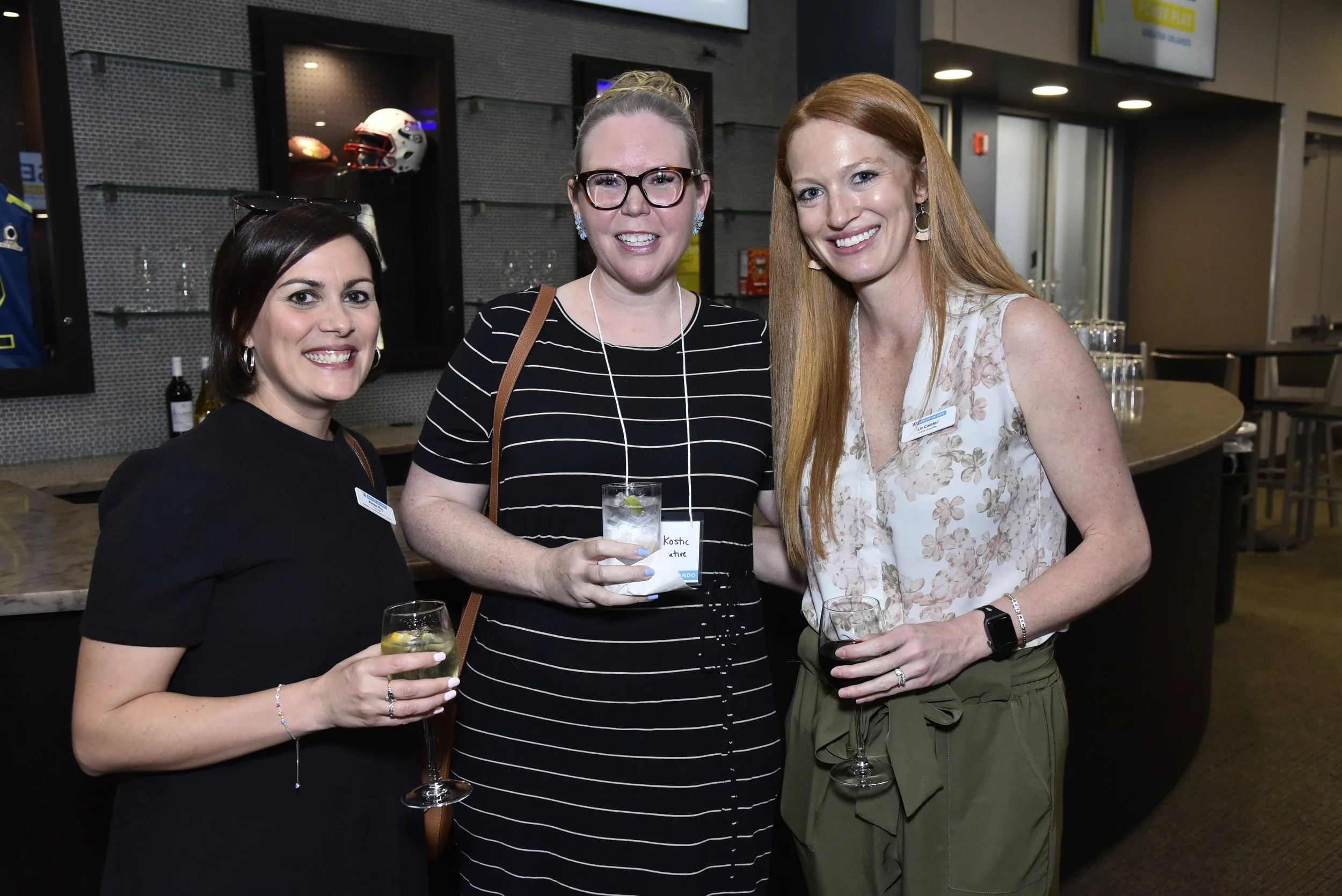
Julie at a Holiday themed networking function.
D - Deliver Consistently
Reputation is built through repetition and reliability.
The most connected people in any community aren't necessarily the most charismatic or the most credentialed. They're the most consistent. They're the ones you see at every event. They're the ones who follow through when they say they will. They're the ones who have become known for something specific, and who keep showing up to reinforce it.
Consistency isn't about being everywhere. In fact, one of the most counterintuitive pieces of advice I give is this: choose fewer organizations and go deeper. Spreading yourself across ten different groups means you're a familiar face to no one. Committing to two or three key organizations, showing up reliably, volunteering strategically, and taking on leadership roles, means you become embedded in those communities in a way that drives real trust and visibility.
My own involvement with PRSA, WISE Greater Orlando, and the American Cancer Society isn't accidental. It's a deliberate choice to show up fully in a few rooms rather than barely in many. That consistency is what builds the kind of reputation that opens doors before you ever have to knock.
Tips for Delivering Consistently:
Tip #13: Choose 2–3 key organizations to engage with deeply and consistently — then actually show up.
Tip #14: If you commit to something, exceed expectations. Every time you follow through, you make a deposit into your professional reputation.
Tip #15: Become known for something specific. A clear, consistent identity makes you memorable and referable.
Networking as Personal Brand Strategy
At its core, networking isn't about selling. It's not about working a room or collecting the most cards or meeting the right people. It's about positioning: how you want to be known, and what you want to be trusted for. It's about contribution: what you bring to the rooms you enter, not just what you hope to take from them. And it's about the kind of long-term influence that only comes from showing up, consistently and intentionally, over time.
The B.R.A.N.D. Method isn't a formula for closing deals at networking events. It's a framework for becoming the kind of person others want to know, trust, and refer.
When you approach every room as an opportunity to build your brand — not pitch your services — you'll leave a lasting impression long before you ever send a proposal.
Your next event is an opportunity. Walk in with intention. Lead with curiosity. Represent your value. Ask better questions. Follow up with care. And show up again next month.
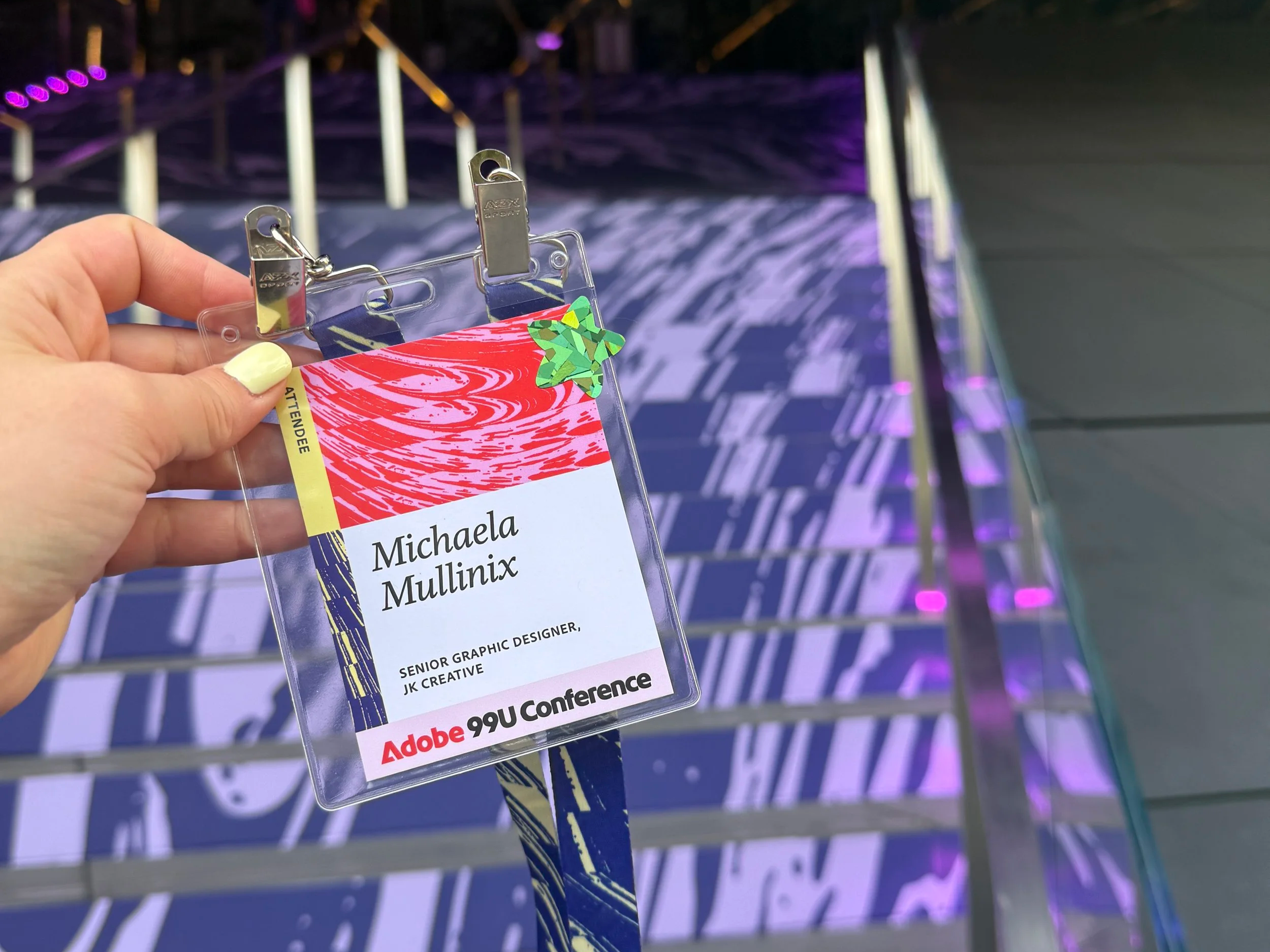







Everyone is talking about what AI can create. We're more interested in what it can't replace. Here's why professional branding still matters—and why your brand deserves more than a prompt.